Introduction
A well-designed summer hobby club transforms long vacation days into a rich learning environment. In Lobnya, where family life, green spaces and community halls create natural opportunities, a summer program can boost children’s development across physical, cognitive and social-emotional domains while connecting them to local culture and nature.
Why a summer hobby club matters for child development
— Supports continuity of learning when formal school is out.
— Provides structured opportunities for practicing social skills: cooperation, conflict resolution, leadership.
— Strengthens executive functions: planning, attention, task persistence and self-regulation.
— Encourages exploration and creativity through low-stakes, interest-driven projects.
— Builds physical literacy and healthy routines in outdoor settings.
Core educational principles to use
— Play-based and project-based learning: children learn best when doing and making.
— Differentiation: adapt tasks by age, ability and interest.
— Positive behavior supports: emphasize encouragement, clear routines and consistent expectations.
— Real-world connections: link activities to Lobnya’s environment (parks, riversides, community traditions).
— Reflection and documentation: help children articulate what they learned through portfolios, displays and short presentations.
Designing a Lobnya-friendly summer program
Consider the town’s character when planning:
— Use outdoor public spaces and community rooms for nature walks, sports and crafts.
— Schedule field-based explorations in the coolest hours in summer and move active play to mornings.
— Leverage proximity to Moscow for occasional guest workshops (artists, scientists) while prioritizing local partners (libraries, clubs).
— Offer morning and afternoon cohorts to accommodate working parents.
Age group structure:
— 4–6 years: short activities, sensory play, basic crafts, songs, gentle motor games.
— 7–9 years: hands-on projects, simple experiments, team games, introduction to planning.
— 10–13 years: deeper project work, leadership roles, skill workshops (robotics basics, photography, theater).
Group size and staffing:
— 4–6 yrs: 1 adult per 6–8 children.
— 7–9 yrs: 1 adult per 8–10 children.
— 10–13 yrs: 1 adult per 10–12 children.
Include trained group leaders plus rotating specialist instructors (art, sports, science).
Sample weekly theme-based program (ages 7–9)
Monday — Nature Detectives
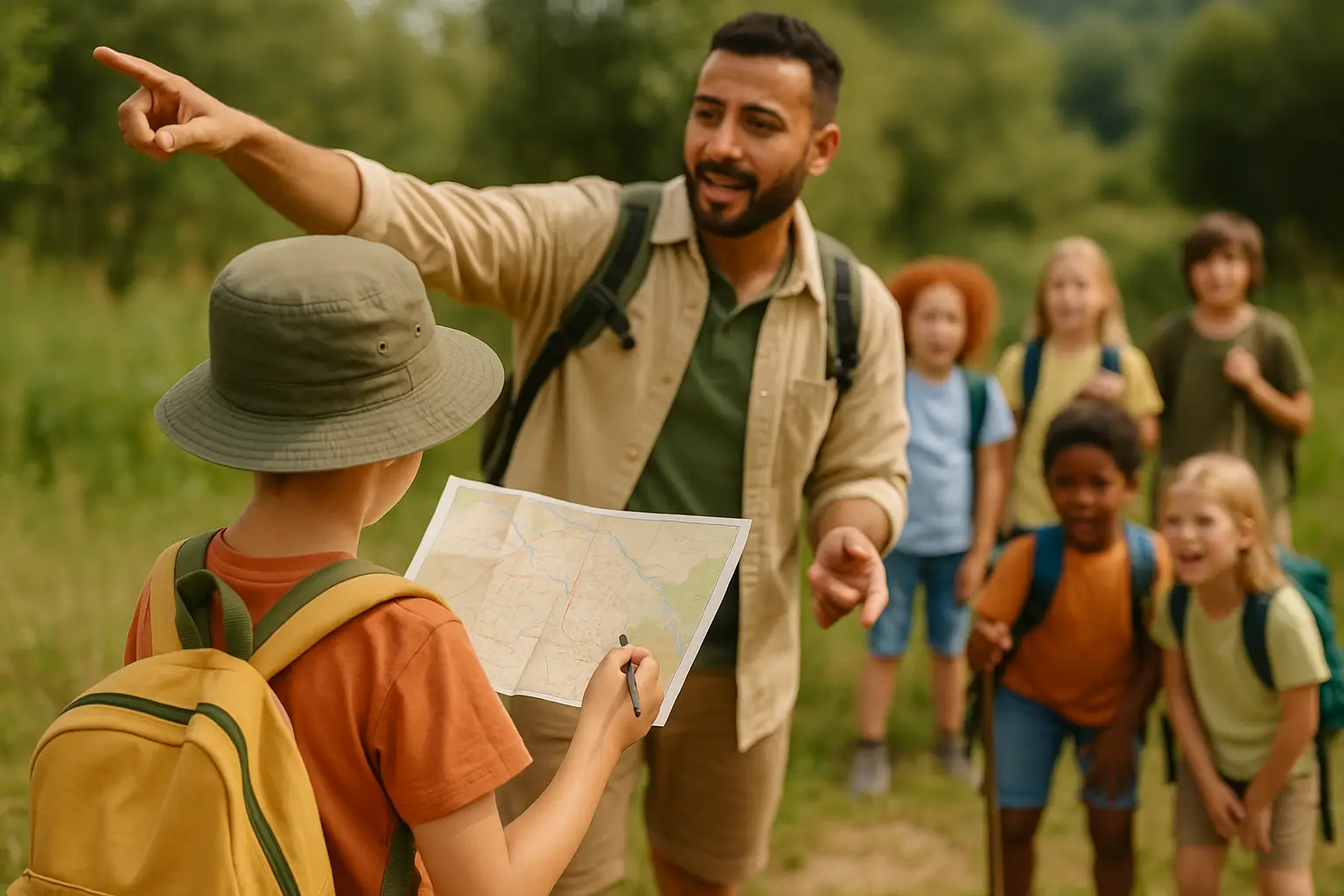
— Morning: Forest walk + observation journal
— Midday: Nature collage craft
— Afternoon: Team scavenger hunt, reflective circle
Tuesday — Mini Makers (STEM)
— Morning: Simple machines workshop
— Midday: Build-and-test station
— Afternoon: Show-and-tell
Wednesday — Creative Arts
— Morning: Drawing/sketching local scenes
— Midday: Clay modelling
— Afternoon: Mini-exhibition for parents
Thursday — Movement & Team Games
— Morning: Athletics basics and relays
— Midday: Cooperative games
— Afternoon: Improvisation and drama play
Friday — Community & Culture
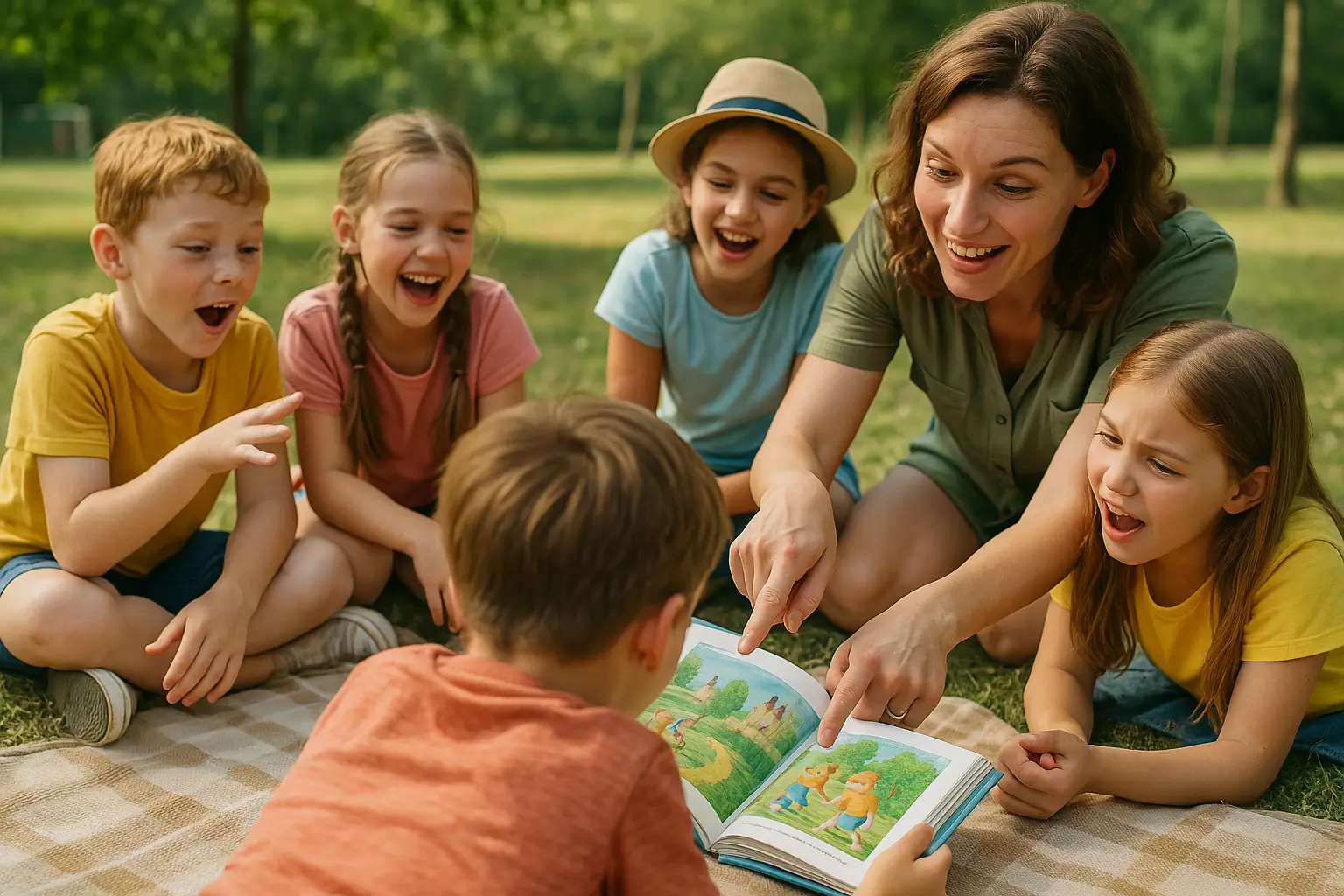
— Morning: Local history walk / museum visit (or storytelling)
— Midday: Group project (mural, play or short film)
— Afternoon: Presentation day and certificates
Activities and the developmental outcomes they support
— Arts and crafts: fine motor skills, creativity, planning and persistence.
— Team projects: cooperation, perspective-taking, communication.
— Outdoor games: gross motor development, risk assessment, healthy energy release.
— Science experiments: hypothesis testing, curiosity, language to describe findings.
— Performing arts: confidence, memory, public speaking.
Safety, logistics and inclusion
— First aid and emergency plan; staff trained in basic pediatric first aid.
— Clear pick-up and sign-in procedures; parental contacts and medical info on file.
— Sun safety: hats, sunscreen, shaded breaks, water access.
— Dietary accommodations for snacks/lunch (allergy-aware).
— Inclusion practices: adapt activities, use visual schedules, support language learners (simple Russian/English cues if helpful).
Engaging families and the Lobnya community
— Weekly newsletters and photo updates (respecting privacy).
— Parent morning or end-of-week showcases to celebrate learning.
— Partnerships with local schools, libraries and cultural centers for spaces and experts.
— Volunteer recruitment from local high-school students for leadership development.
— Affordable tiered pricing and scholarship spaces to ensure access.
Measuring impact and success
— Portfolios: samples, photos and children’s short reflections.
— Simple developmental checklists (baseline and end-of-session) focused on social skills, independence and task completion.
— Parent and child surveys: satisfaction, perceived growth, suggestions.
— Public showcase or mini-festival to demonstrate skills and foster community pride.
Practical steps to launch in Lobnya
1. Secure 1–2 likely venues (park permit, school gym, community hall).
2. Define age groups, weeks of operation and daily hours.
3. Recruit and train staff; run a short pilot week with a limited group.
4. Draft safety, health and inclusion policies; collect parental permissions.
5. Market locally: school bulletins, VKontakte groups, flyers at libraries and shops, local parenting forums.
6. Start registration with clear payment and cancellation policies; cap group sizes for quality.
Final notes
A summer hobby club in Lobnya can be more than childcare — it becomes a small community of learners where curiosity, skills and friendships grow. With thoughtful design, safety and local partnerships, the club can produce measurable developmental gains and memorable summer experiences for children and families alike.
If you’d like, I can draft:
— a two-page flyer text for local distribution,
— a week-by-week curriculum for a 4-week session, or
— a sample registration form and parent consent template. Which would help you most?