Why a summer hobby club matters in Lobnya
A well-designed summer hobby club gives children a safe, stimulating space to learn, socialize and explore during the long summer months. For families in Lobnya, such clubs combine local resources (parks, libraries, sports grounds) with structured activities that boost social skills, creativity, physical health and cognitive development—while making summer fun and meaningful.
Developmental goals and learning outcomes
Design the club with clear, age-appropriate goals:
— Social and emotional: cooperation, conflict resolution, confidence, and resilience.
— Cognitive: curiosity, problem-solving, language development and basic STEM thinking.
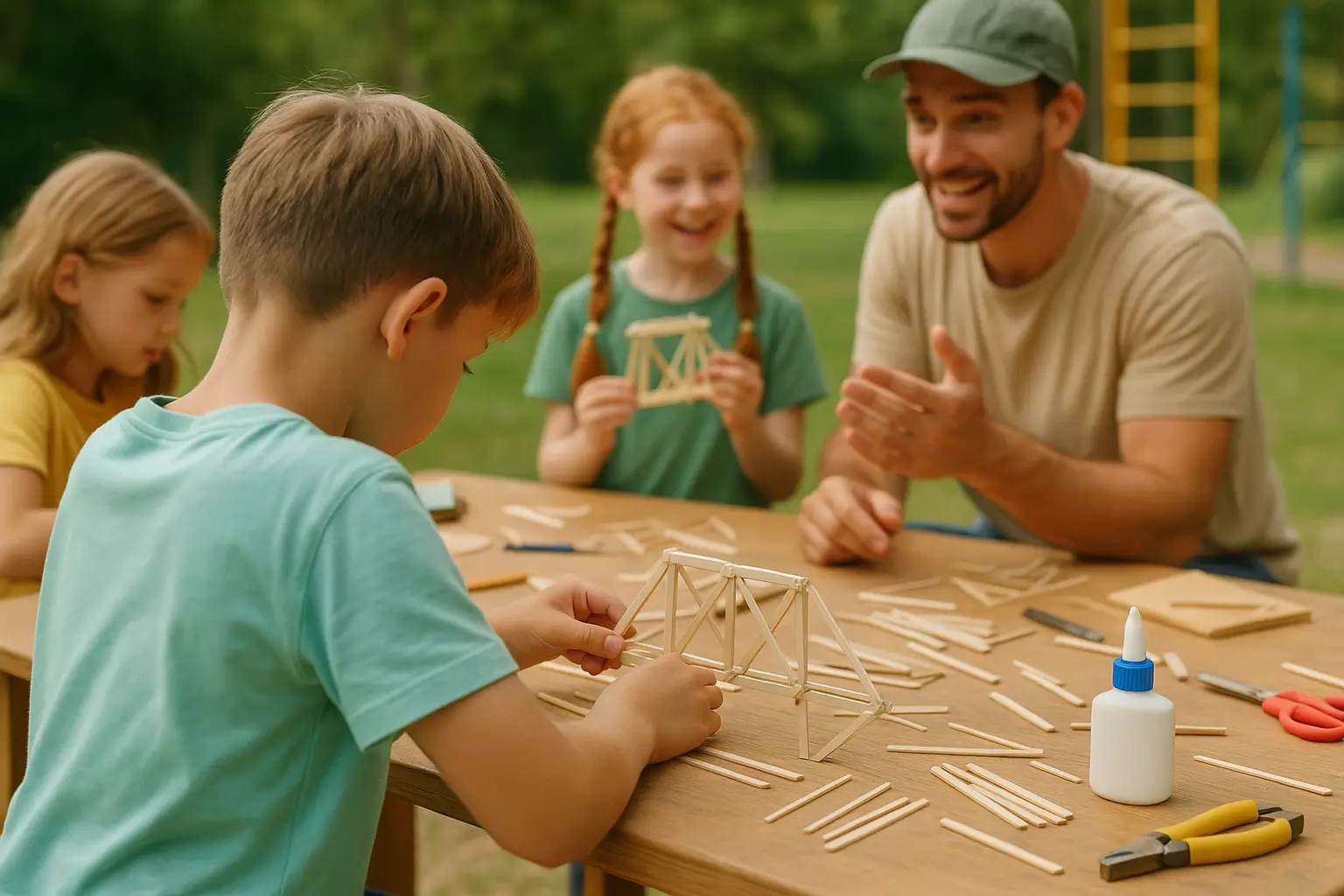
— Motor skills: gross motor (running, jumping, team sports) and fine motor (art, crafts, model building).
— Creativity and expression: drama, visual arts, music, storytelling.
— Civic and cultural awareness: local history, nature stewardship (e.g., learning about the Ucha river ecosystem), and community projects.
Age groups and focus areas
Organize groups to match developmental needs:
— 5–6 years: play-based exploration, sensory activities, short group games.
— 7–9 years: hands-on projects, team challenges, basic experiments, craft workshops.
— 10–12 years: project-based learning, leadership tasks, deeper STEM or art modules, mini-enterprises (e.g., organizing a fair).
Weekly thematic structure (sample)
Each week has a clear theme to keep engagement high:
— Week 1 — Nature & Outdoor Skills: scavenger hunts, birdwatching, simple ecology workshops.
— Week 2 — Arts & Crafts: painting, clay, collaborative murals.
— Week 3 — Science & Invention: small experiments, engineering challenges, maker activities.
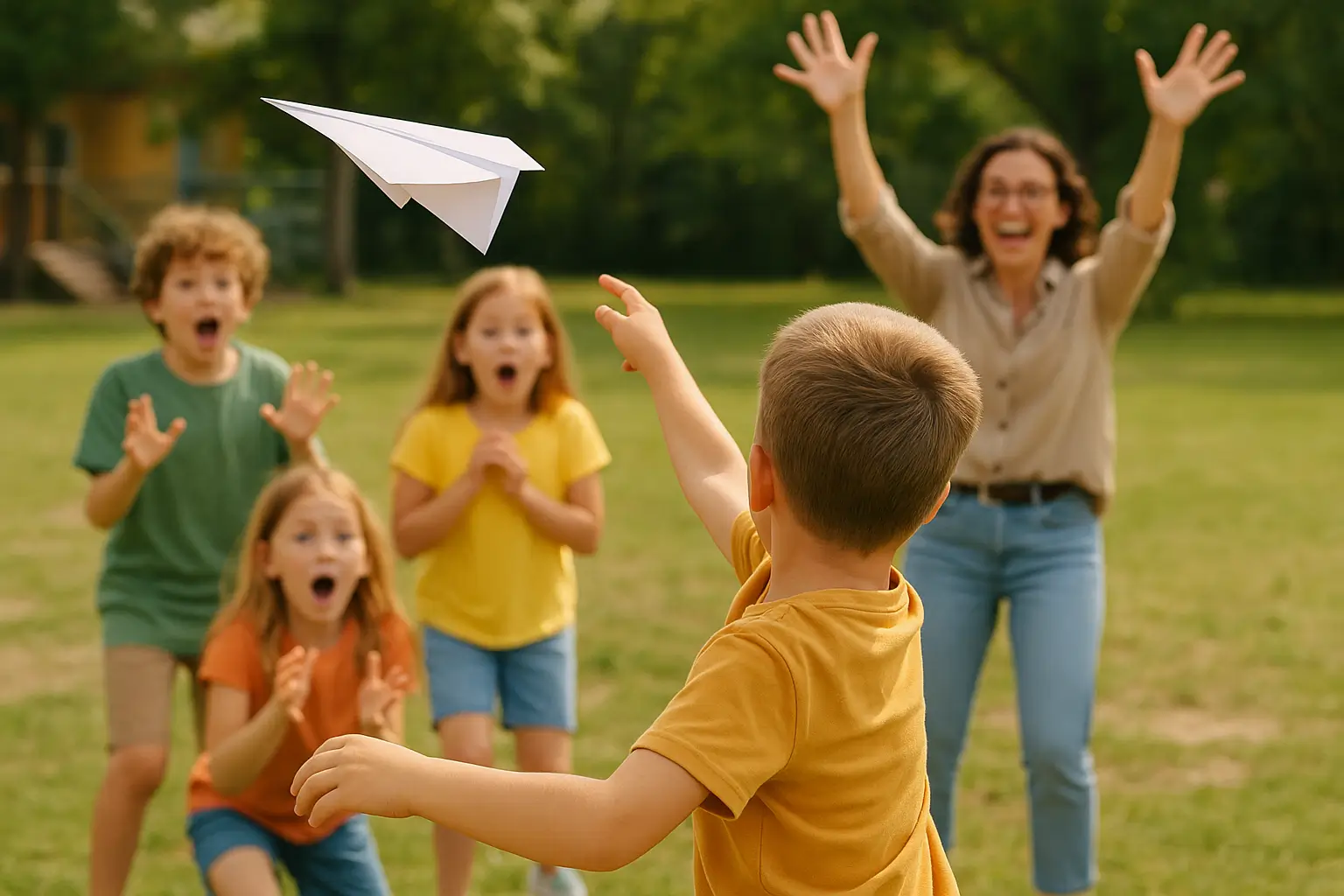
— Week 4 — Sports & Teamwork: fun athletics, orienteering, team-building games.
— Week 5 — Local Culture & Community: visits to libraries, local history mini-lessons, community service projects.
Activity examples with developmental focus
— Cooperative mural (arts + social): fosters planning, shared responsibility and fine-motor control.
— Mini-robot building (STEM + problem solving): introduces sequencing, basic circuits and perseverance.
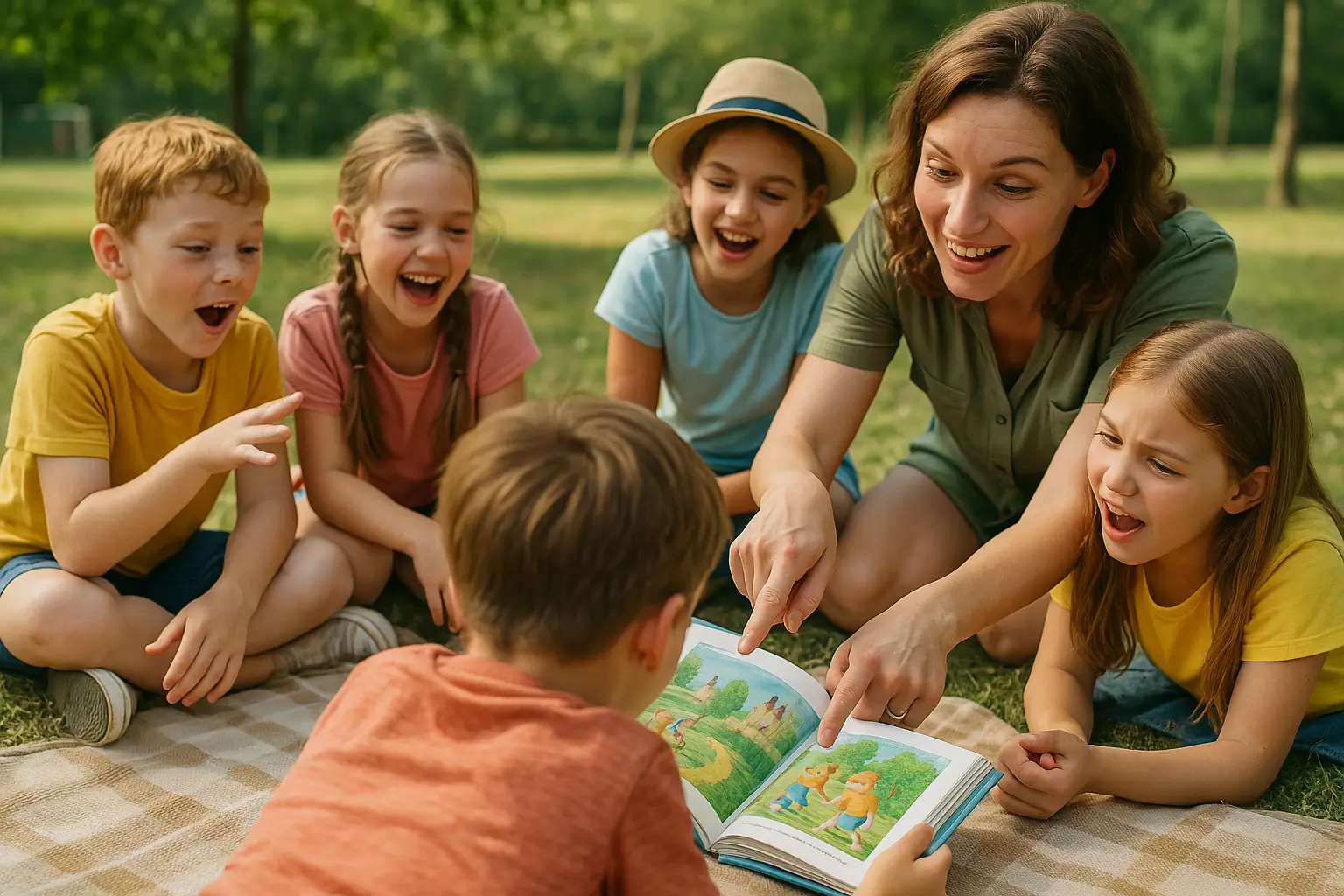
— Nature journal walks (literacy + observation): boosts vocabulary, reflection and scientific observation.
— Role-play markets (math + social): money concepts, negotiation and public speaking.
— Daily circle time (emotional skills): sharing feelings, setting intentions, conflict resolution practice.
Using Lobnya’s local assets
Leverage community resources to enrich the program:
— City parks and green spaces for nature weeks and sports.
— Libraries and municipal cultural centers for reading clubs, crafts, and guest workshops.
— Local sports facilities or school gyms for rainy-day activities.
— Small field trips to learn local history or environmental spots (coordinate permissions and transport).
Safety, staffing and logistics
Prioritize child safety and clear organization:
— Ratios: aim for 1 adult per 6–10 children depending on age and activity risk.
— Staff: background checks, first-aid training, child development or teaching experience.
— Health & permissions: parental consent forms, allergy and emergency contact info, medication protocols.
— Sun & weather: shaded rest areas, sunscreen reminders, indoor program alternatives for heat or rain.
— Transport: secure pickup/drop-off plans; use municipal transport or trusted providers if needed.
Parental communication and assessment
Keep parents informed and involved:
— Weekly newsletters or a messaging group with photos, daily highlights and learning goals.
— Short progress notes: social milestones, new skills, areas to support at home.
— Showcase events: end-of-week performances, exhibitions or a small fair to celebrate progress.
Measuring outcomes (simple, practical)
Use informal, child-friendly assessment:
— Portfolios: collection of artwork, photos and written reflections.
— Skill checklists: basic markers for teamwork, independence, fine/gross motor tasks.
— Observation notes: staff record social interactions, persistence and problem-solving moments.
Practical tips for organizers in Lobnya
— Build partnerships with municipal services and local businesses for venue space, materials or guest instructors.
— Keep costs manageable: use recycled materials, group buys and volunteer expertise.
— Offer flexible schedules: half-day options for younger kids, full-day for older ones, with early drop-off and late pick-up when needed.
— Plan for inclusivity: adapt activities for different abilities and language levels.
Tips for parents
— Pack practical items: water bottle, hat, comfortable shoes, sunscreen, change of clothes and a small snack if not provided.
— Encourage independence: small tasks at home (packing bag, choosing clothes) help children transition to group settings.
— Reinforce club themes at home: read books on the week’s topic or do a simple follow-up activity together.
Getting started and next steps
— Contact local community centers, libraries or the municipal education department to inquire about spaces, schedules and possible subsidies.
— Pilot a 2–4 week program to test activities, staffing and demand; gather parent feedback and iterate.
— Publicize through schools, local social media groups and municipal notice boards to reach families across Lobnya.
By combining playful learning, local resources and clear developmental goals, a summer hobby club in Lobnya can become a memorable, growth-oriented experience for children—and a valued community resource for parents.