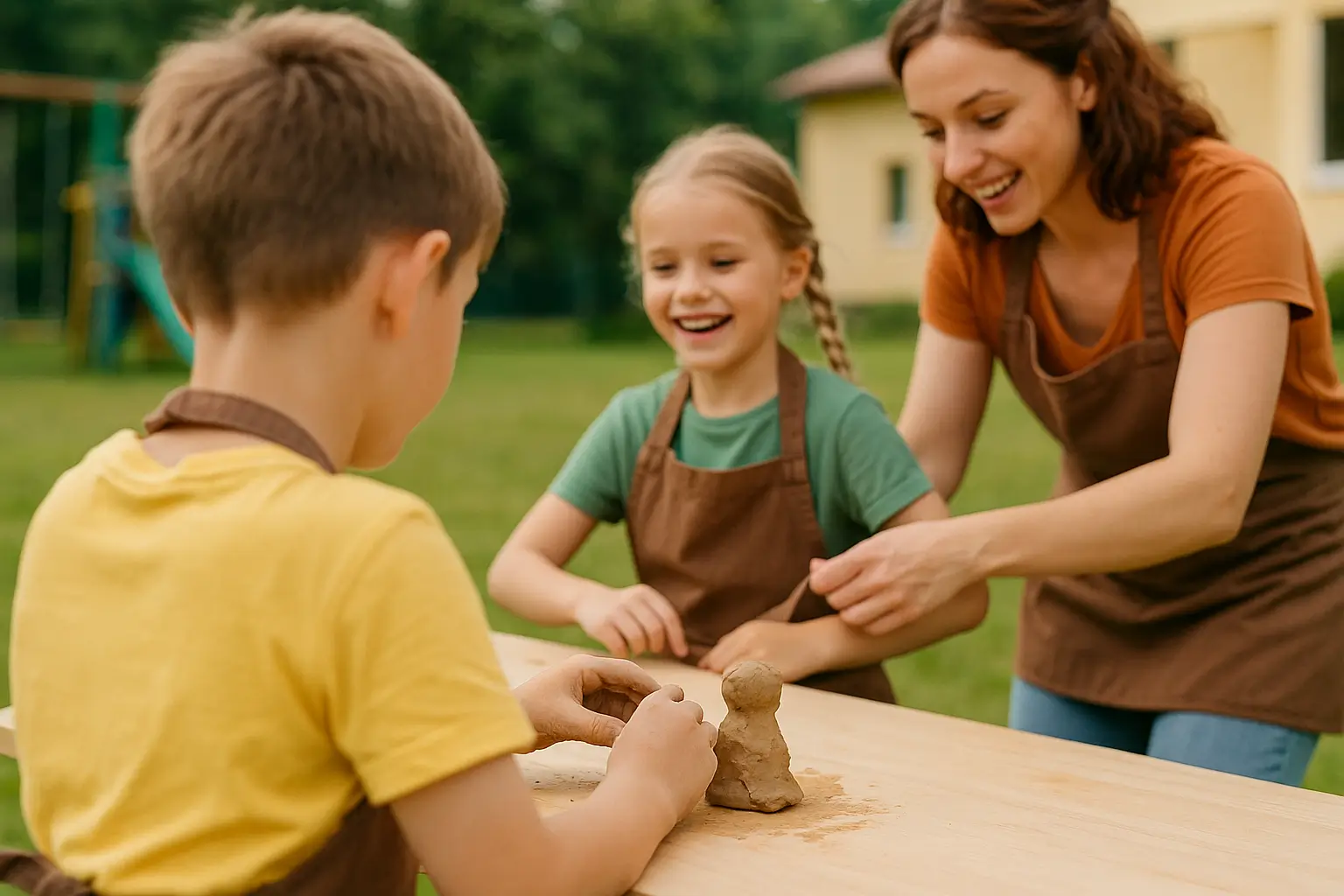
Summer Hobby Club in Lobnya: Growing Skills, Curiosity, and Community
Summer is a powerful season for learning—longer days, fresh air, and fewer formal obligations create the perfect environment for a hobby club that supports child development. This guide outlines how to design and run a summer hobby club for kids in Lobnya that’s fun, educational, and rooted in local community life.
Why a summer hobby club matters
— Promotes holistic development across cognitive, social-emotional, physical and creative domains.
— Maintains learning momentum between school years and reduces “summer slide.”
— Builds social connections and local identity for children in Lobnya.
— Offers families a flexible, local option for meaningful daytime activities.
Clear developmental goals (by age)
— Ages 5–7: *Exploration and social skills* — fine motor control, basic cooperative play, language growth.
— Ages 8–10: *Skill-building and curiosity* — project focus, problem-solving, teamwork, responsibility.
— Ages 11–14: *Independence and mastery* — leadership, deep dives into hobbies, project planning and presentation.
Program structure and cadence
— Duration: 4–8 weeks, with weekly changing themes or progressive projects.
— Daily rhythm (example):
— Arrival & warm-up (20–30 min)
— Focused hobby block 1 (60–90 min)
— Active outdoor break (30 min)
— Focused hobby block 2 (60–90 min)
— Reflection / group wrap-up (15–20 min)
— Group sizes: aim for 8–12 children per instructor for elementary ages; older groups can be slightly larger with assistant leaders.
Sample weekly themes (4-week example)
Week 1 — Nature & Discovery: mini-ecology, nature journals, insect safaris in local parks.
Week 2 — Creative Arts: painting, crafts using recycled materials, murals.
Week 3 — Science & Making: simple robotics, experiments, build-and-test challenges.
Week 4 — Performance & Community: songs, short plays, presentations for families.
Activity ideas mapped to developmental domains
— Cognitive: science experiments, coding basics, engineering builds, problem-solving challenges.
— Social-emotional: cooperative games, peer-led projects, circle time with reflection prompts.
— Physical: orienteering, relays, dance, basic sports clinics adapted for mixed-abilities.
— Creative: theater workshops, visual arts stations, story-building and zine-making.
— Practical life & responsibility: garden plots, caring for class plants, simple cooking projects.
Sample micro-projects with outcomes
— Build a bird feeder (outcome: fine motor skills, understanding ecosystems).
— Group mural about Lobnya (outcome: community identity, collaborative planning).
— Mini science fair (outcome: hypothesis testing, public speaking).
Staffing, safety, and logistics
— Staff mix: 1 lead instructor + 1 assistant per 8–12 children; additional specialists for activities (e.g., art teacher, sports coach).
— Ratios and first aid: follow local child-care regulations; ensure staff trained in first aid and child safeguarding.
— Venues: school gymnasiums, community centers, libraries, safe park areas. Rotate indoor/outdoor depending on weather.
— Daily check-in/out system, emergency contacts, clear allergy and medication protocols.
— Transport: prioritize walkable sites; if transports used, adhere to safe transport rules and parental permissions.
Partnering with local Lobnya resources
— Invite local arts teachers, librarians, sports clubs, and volunteer parents to lead sessions.
— Use nearby green spaces for nature activities and short field trips.
— Display student work in local cultural centers or library to increase visibility and pride.
— Consider collaboration with local schools and youth centers to share space and recruit participants.
Inclusion and accessibility
— Offer multi-level instructions and materials for different abilities.
— Provide quiet zones for children who need breaks from group activity.
— Keep fees flexible; offer sliding-scale or scholarship spots to ensure broad access.
Evaluation and communication with parents
— Weekly snapshots: short photos and a 2–3 sentence highlight sent by email or messenger.
— End-of-session showcase: invite families to a mini-exhibition or performance.
— Simple assessment: track participation, skill milestones, and social growth with brief notes per child.
— Solicit parent feedback with a short survey to improve future sessions.
Marketing and enrollment tips for Lobnya
— Promote in local parent communities on VK and Telegram, school newsletters, playground noticeboards, and library bulletin boards.
— Offer early-bird discounts and sibling rates.
— Host an open-day trial session so families can meet instructors and see the program.
— Emphasize safety measures, qualifications of staff, and clear daily schedules in promotional materials.
Budgeting and funding ideas
— Basic cost items: instructor pay, materials, venue rental, insurance, first-aid supplies.
— Reduce costs by partnering with local organizations, applying for small community grants, or asking materials donations from parents.
— Consider a modest fee with subsidized places for families in need.
Measuring success
— Attendance and retention rates.
— Positive changes in cooperation, confidence, and skills (teacher-parent reports).
— Quality of final projects and student presentations.
— Parent satisfaction and community engagement (number attending showcases).
Closing — build community as you build skills
A summer hobby club in Lobnya can be much more than childcare: it’s a place where curiosity is nurtured, friendships form, and local pride grows. By combining thoughtful developmental goals, safe logistics, strong community partnerships, and clear communication with families, your club can become a highlight of the summer for children and parents alike.
If you’d like, I can draft:
— a sample 6-week curriculum by age group,
— a promotional flyer text for VK and Telegram, or
— a parent permission form template tailored to Lobnya. Which would you prefer?