Summer Hobby Club in Lobnya: Growing Minds and Confident Kids Through Play, Projects, and Community
A well-designed summer hobby club in Lobnya gives children more than fun ways to spend warm months — it supports cognitive, social, emotional and physical development, connects families to the community, and builds skills that last a lifetime. This article explains how a summer hobby club can support child development, what a typical program looks like, and pragmatic tips for parents and organizers in Lobnya.
Why a summer hobby club matters for child development
— *Holistic learning beyond the classroom.* Clubs let children explore interests (art, robotics, ecology, theatre) at their own pace, reinforcing motivation and creativity.
— *Safe risk-taking and resilience.* Small projects and challenges teach persistence, problem-solving, and how to recover from mistakes.
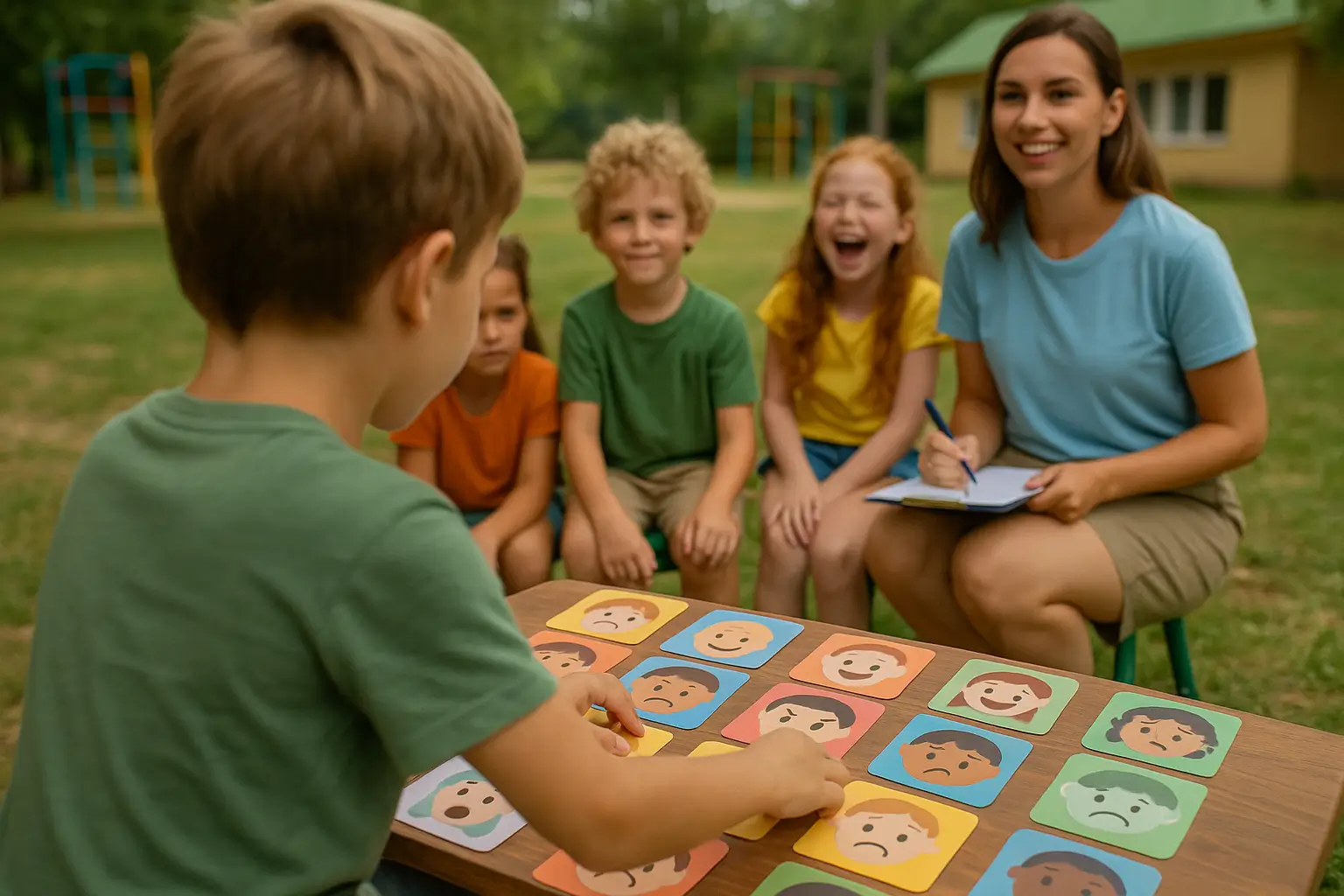
— *Social and emotional growth.* Group activities improve communication, cooperation, empathy and leadership in a relaxed, play-based setting.
— *Physical development and health.* Outdoor games and hands-on crafts support motor skills, coordination and healthy habits.
— *Community ties.* Local outings and collaborations with Lobnya libraries, cultural centers and parks strengthen civic identity and parental networks.
Who benefits and how
— Ages 5–7: play-based exploratory learning — fine motor practice, storytelling, basic teamwork.
— Ages 8–10: skill building and collaborative projects — inquiry, small-group planning, public sharing.
— Ages 11–14: deeper specialization — mentorship roles, project ownership, presentation skills.
Typical weekly structure (sample)
— Monday: Theme introduction + warm-up games
— Tuesday: Skill workshop (technique, tools, safety)
— Wednesday: Project work + outdoor activity in a local park
— Thursday: Guest session (local artist, librarian, firefighter) or field trip
— Friday: Showcase, reflection and celebration
Daily rhythm (approximate)
— Arrival & free play (15–20 min)
— Circle time & goals for the day (10–15 min)
— Focused activity or workshop (40–60 min)
— Snack & outdoor movement (20–30 min)
— Project time / station rotation (40–60 min)
— Reflection / presentation & pickup (15–20 min)
Activity ideas tied to development goals
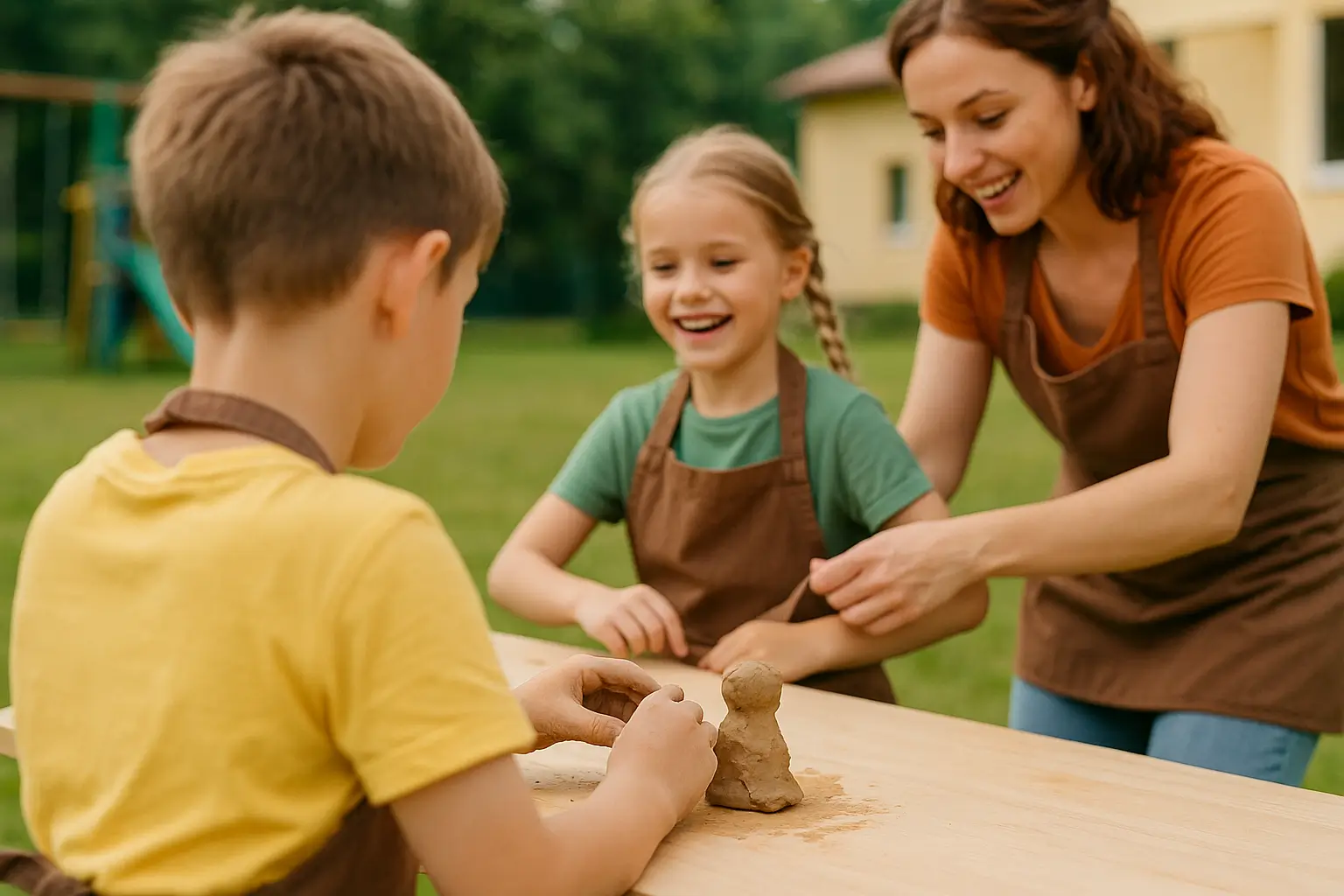
— Creative arts (drawing, clay, theatre): builds expression, fine motor skills, self-confidence.
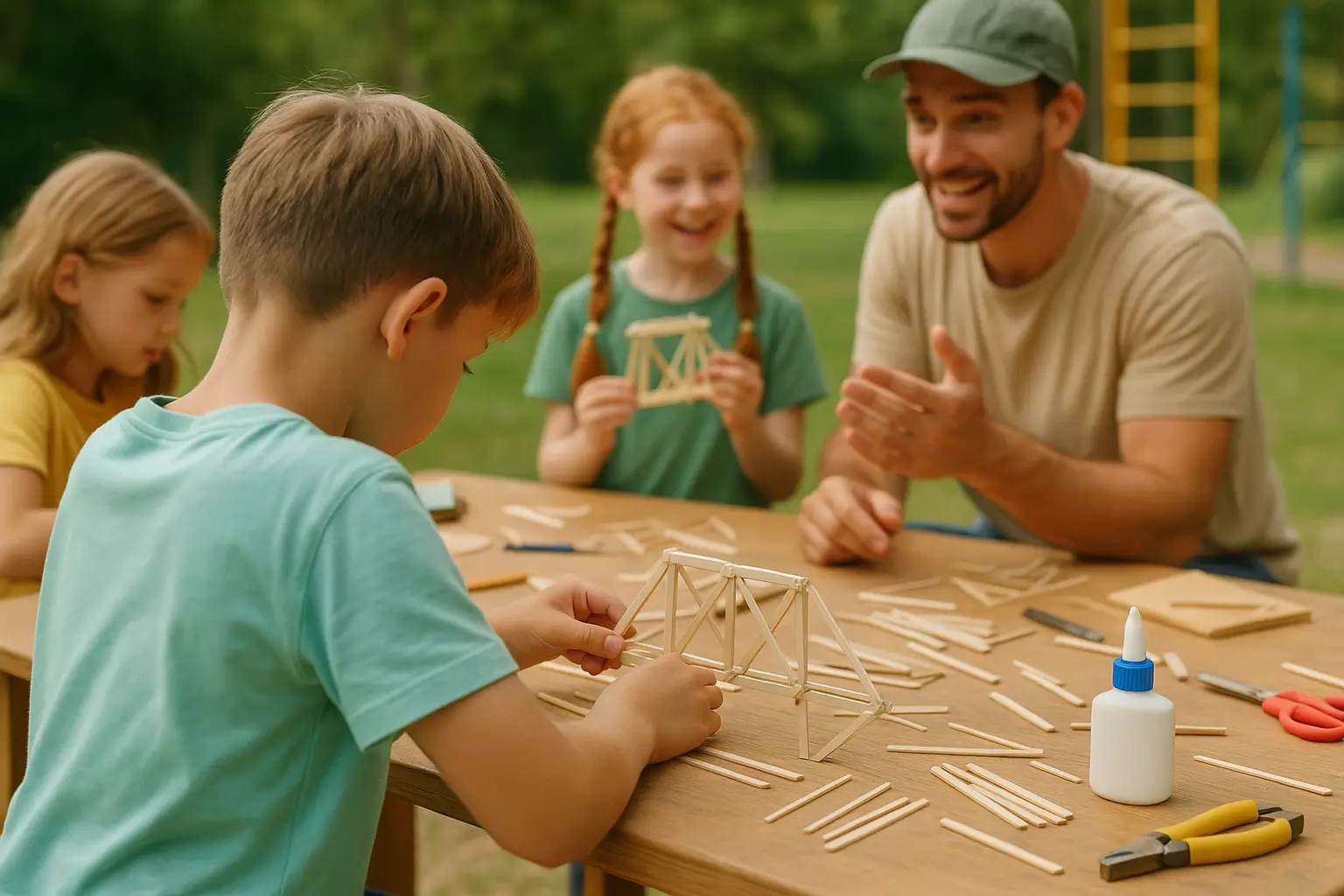
— STEM & robotics: fosters logical thinking, experimentation, and teamwork.
— Nature & ecology walks in Lobnya neighborhoods: cultivates curiosity, observation, environmental stewardship.
— Mini-enterprise projects (market stalls, craft sales): practical math, planning, communication.
— Reading clubs and library missions: literacy, imagination, cultural awareness.
— Sports and movement sessions: gross motor skills, cooperation, healthy routines.
Safety, logistics and local considerations
— Use safe indoor spaces (schools, community centers, local ДК) and supervised outdoor spots (local parks). Confirm permissions and timings.
— Maintain small groups (8–12 children per facilitator) by age band for effective supervision and individualized support.
— Clear sign-in/out procedures, emergency contact list, basic first aid on site.
— Weather plan for Lobnya summers — indoor contingency for rains.
— Materials: low-cost, reusable supplies; involve parents and local businesses for donations.
Measuring progress and celebrating success
— Portfolios: photos and samples of projects show growth over the session.
— Mini-shows and exhibitions: invite family and friends to presentations.
— Badges/certificates for skills achieved (teamwork, creativity, leadership).
— Short reflections: children name what they learned and what they want to try next.
Partnering with Lobnya institutions
— Reach out to local libraries and cultural houses for space, guest speakers and promotional support.
— Collaborate with nearby schools for facilities and to recruit participants.
— Engage volunteers — older students or local hobbyists — with clear roles and brief training.
— Consider local municipal programs or summer activity listings to increase visibility.
Practical tips for parents
— Let children choose activities to boost intrinsic motivation.
— Pack a reusable water bottle, hat and sun protection for outdoor days.
— Encourage reflection: ask “What did you make today?” rather than “Did you have fun?”
— Support steady attendance — skill-building compounds over repeated sessions.
— Volunteer one session to see how the club operates and meet staff.
For organizers: quick checklist
— Define age groups, staff-to-child ratio and daily schedule.
— Build a themed curriculum with flexible stations for varied interests.
— Source safe spaces and simple supplies; create a rainy-day plan.
— Promote through local social groups, schools, and community boards in Lobnya.
— Track outcomes with portfolios, photos and end-of-session showcases.
Final note
A summer hobby club in Lobnya is more than babysitting — it’s an investment in children’s development, community bonds and lifelong interests. With simple planning, safe supervision, and meaningful activities, your club can create a summer that children remember: full of discovery, friends, confidence and new skills.
If you’d like, I can draft:
— a sample 4-week program by age group,
— a promotional flyer text for Lobnya parents,
— or a volunteer recruitment blurb tailored to local platforms. Which would you like next?