Summer Hobby Club in Lobnya: Growing Skills, Curiosity, and Community
Introduction
A well-designed summer hobby club can be a powerful environment for child development—combining learning, play, and community connection. In Lobnya, such clubs offer local children a chance to explore new interests, build social skills, and stay active during the long summer months near Moscow. This article outlines how to design and run a club that fosters emotional, cognitive, physical, and social growth while being practical for Lobnya families.
Developmental goals
A summer hobby club should aim to:
— Promote *social and emotional learning* (cooperation, empathy, self-regulation)
— Stimulate *cognitive development* (problem-solving, curiosity, creativity)
— Support *physical health and motor skills* through active play and sports
— Encourage *autonomy and responsibility* (project ownership, simple leadership)
— Build *community belonging* by connecting kids with peers and local places
Core activities and why they matter
Mixing diverse activities gives children multiple ways to learn and express themselves.
— Creative arts (painting, crafts, theater)
— Boosts fine motor skills, imagination, and confidence.
— Science and mini-engineering projects
— Encourages inquiry, hypothesis-testing, and persistence.
— Nature exploration and environmental projects
— Strengthens observation skills and fosters stewardship of local parks and green spaces.
— Sports and active games
— Develops coordination, teamwork, and healthy habits.
— Local history and community projects
— Builds local pride and civic awareness (visits to community centers, libraries).
— Music and movement
— Enhances rhythm, listening skills, and emotional expression.
— Mini-enterprise or project weeks
— Practical math, planning, communication — children present a final project or fair.
Sample weekly structure (ages 6–11)
— Monday: Welcome circle + creative workshop (arts)
— Tuesday: Outdoor nature walk + science experiment
— Wednesday: Sports and cooperative games + free play
— Thursday: Project work (groups plan a presentation or exhibit)
— Friday: Performance/exhibit + reflection and awards
— Daily: Snack, quiet time, and an end-of-day reflection
Teaching approaches that work
— Play-based and inquiry-led learning: Let curiosity lead; adults act as facilitators.
— Small-group rotations: Keeps attention strong and allows varied skill-building.
— Scaffolding: Provide help when needed, then step back as children gain confidence.
— Routine with flexibility: Children thrive on predictable rhythms but need room to choose.
— Positive behavior supports: Reinforce cooperation and problem-solving, not just compliance.
Social-emotional learning (SEL)
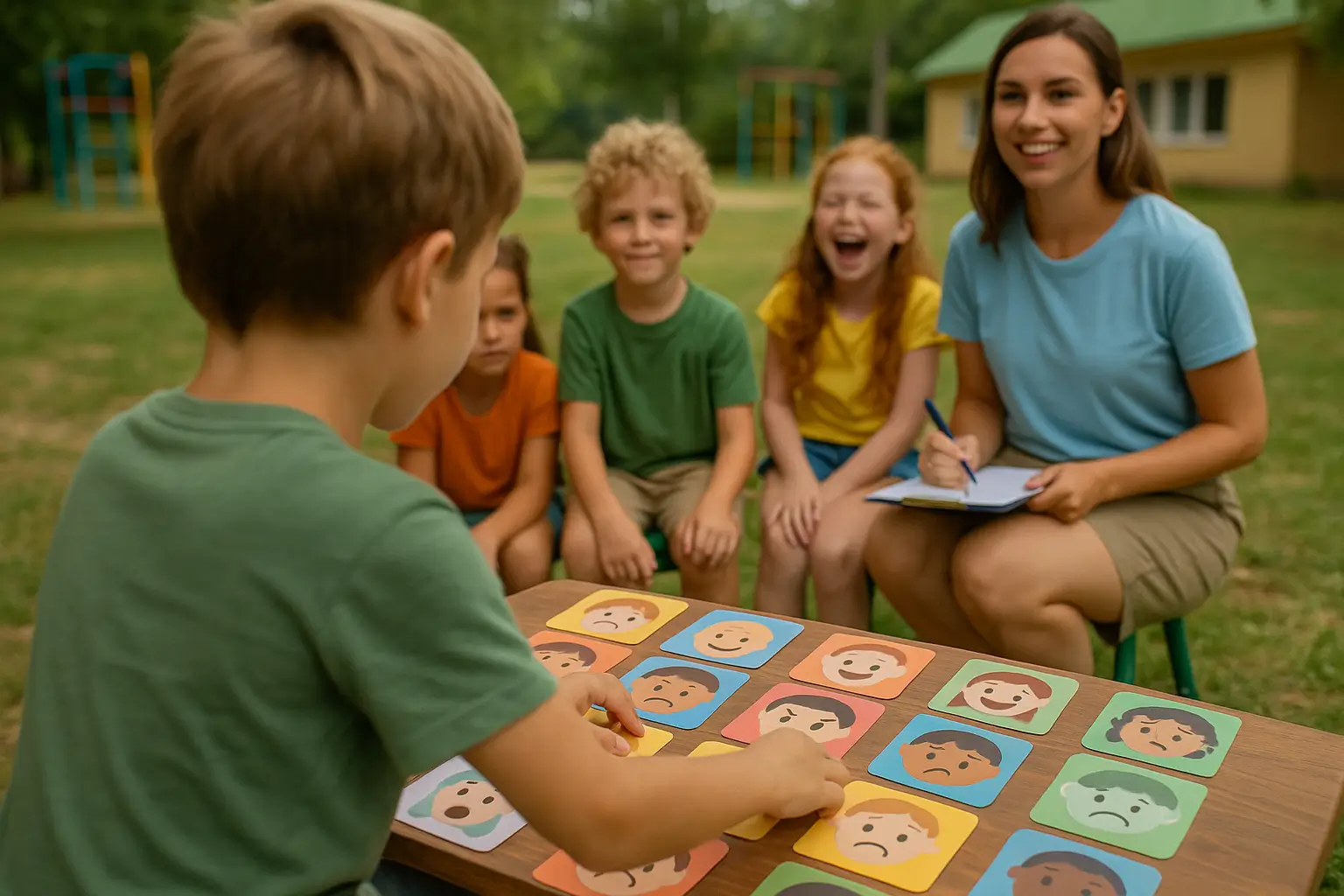
— Start each day with a short check-in (feelings chart, mood meter).
— Teach conflict-resolution through role-play.
— Encourage reflection: What went well? What would you try differently?
— Offer leadership roles (line leader, materials manager) to build responsibility.
Inclusion and accessibility
— Group by developmental level, not just age.
— Offer alternative formats for activities (sensory-friendly options, quieter spaces).
— Communicate proactively with parents about individual needs and accommodations.
Safety and logistics
— Staff ratio: aim for 1:8 for younger kids (5–7) and 1:12 for older children (8–12).
— Basic procedures: sign-in/out system, emergency contact list, first-aid trained staff.
— Outdoor planning: sunscreen, hats, shaded rest breaks; alternate indoor spaces during heat or rain.
— Permissions: written parental consent for excursions and photos; clear health/medication protocols.
Engaging Lobnya families and community
— Use local venues: parks, community centers (дом культуры), libraries, and school gyms.
— Partner with local specialists: artists, sports coaches, naturalists, and library staff.
— Host a mid-season family day or closing fair to showcase children’s projects.
— Offer staggered hours or half-day options for working parents.
Measuring success
— Short-term: daily reflections, completed projects, observed social cooperation.
— Mid-term: parent and child satisfaction surveys, attendance and re-enrollment rates.
— Long-term: noticeable gains in confidence, new hobbies adopted after club ends, peer connections maintained.
Enrollment tips for parents in Lobnya
— Look for clear schedules, staff qualifications, and safety policies.
— Ask about group sizes, sample daily plans, and how individual needs are met.
— Prioritize programs that emphasize *skill-building and play* over passive supervision.
— Early registration is common—summer spots fill quickly.
Conclusion
A summer hobby club in Lobnya can be much more than a way to pass the long days—it can be a formative experience that nurtures curiosity, resilience, and community ties. With a balanced program of creative, scientific, physical, and civic activities, staffed by caring adults and connected to local resources, children leave summer with new skills, friendships, and a stronger sense of themselves.
If you’d like, I can draft a one-page flyer, a sample lesson plan, or a parent information sheet tailored for Lobnya families. Which would help you most?